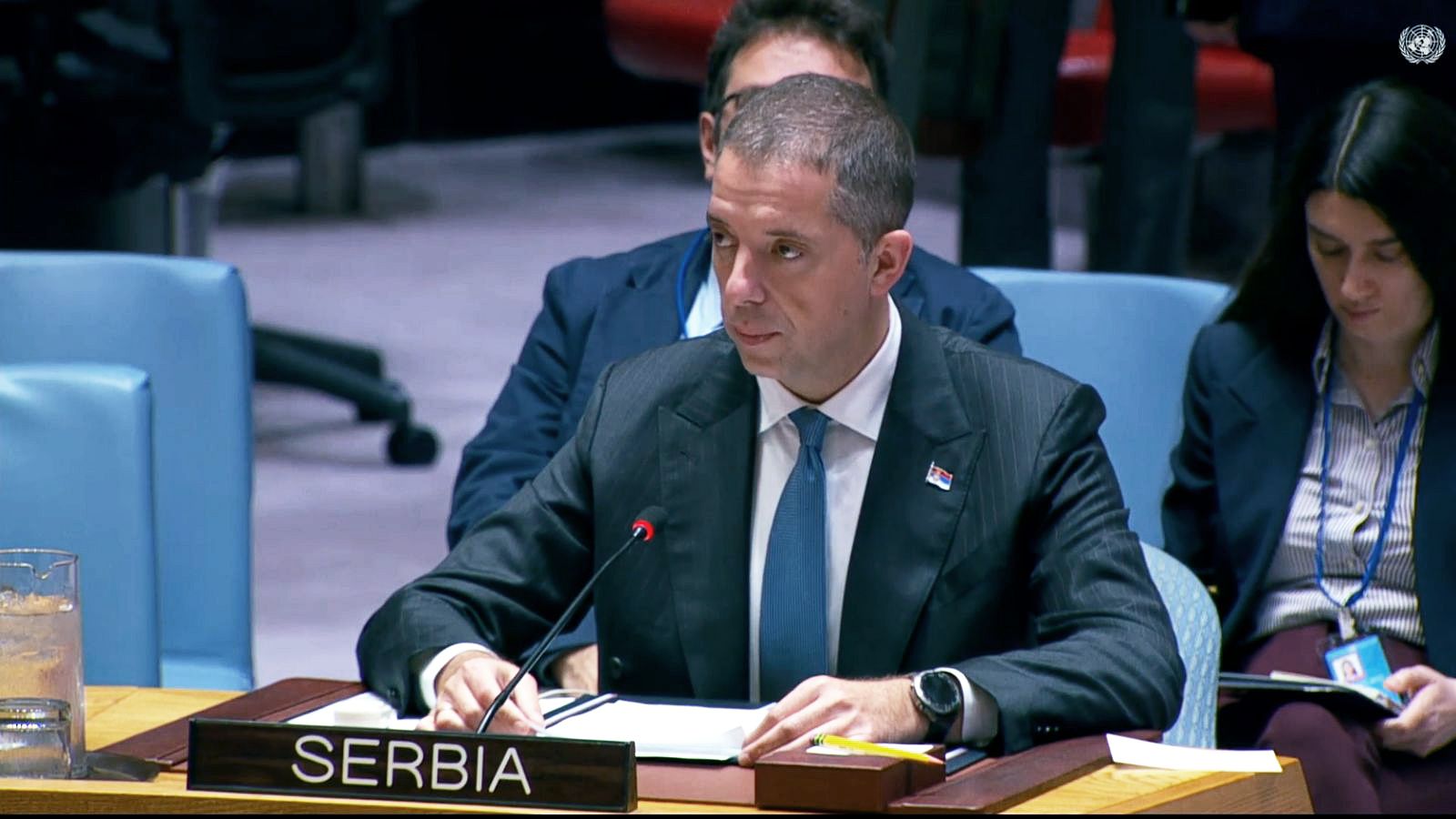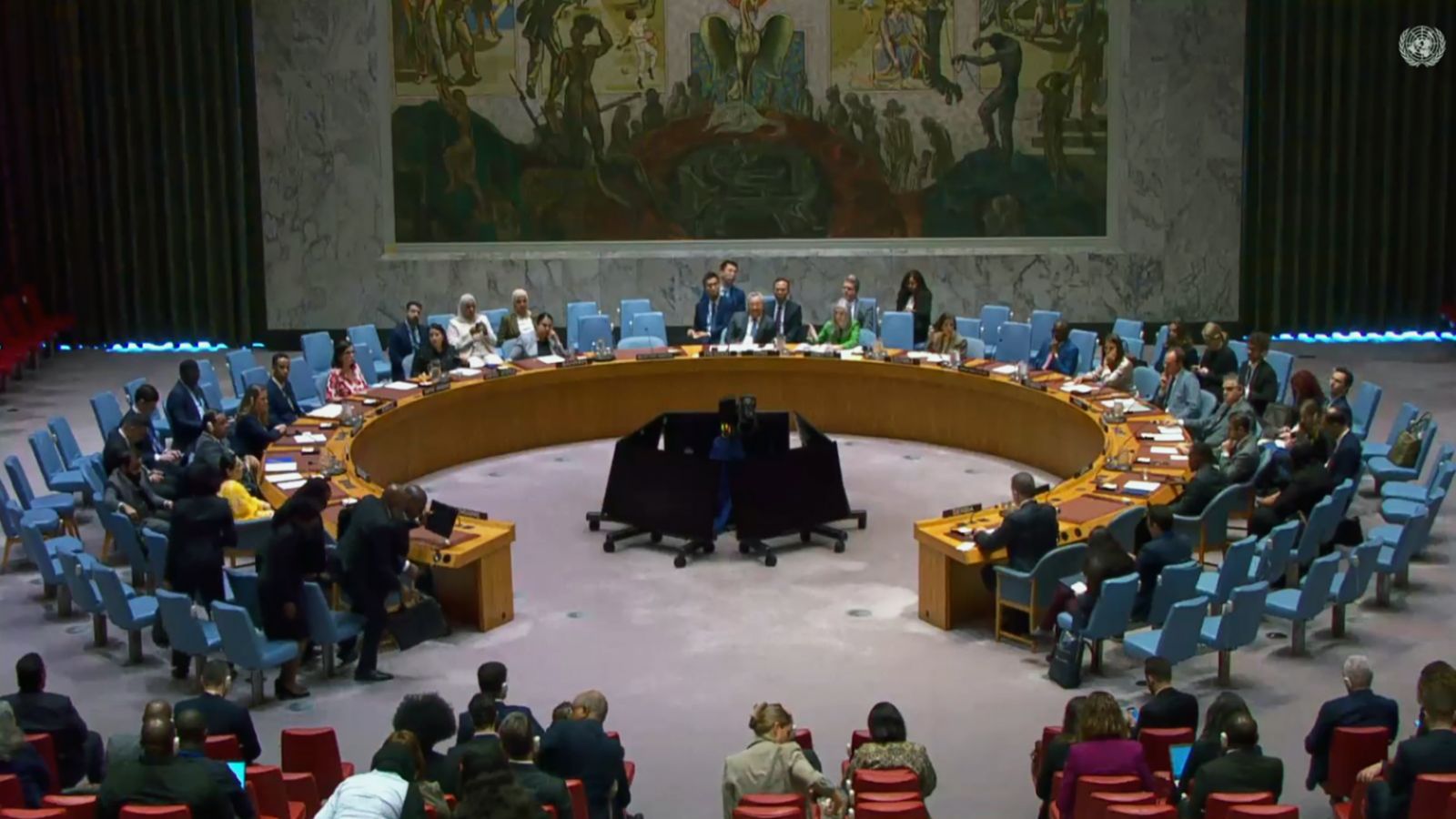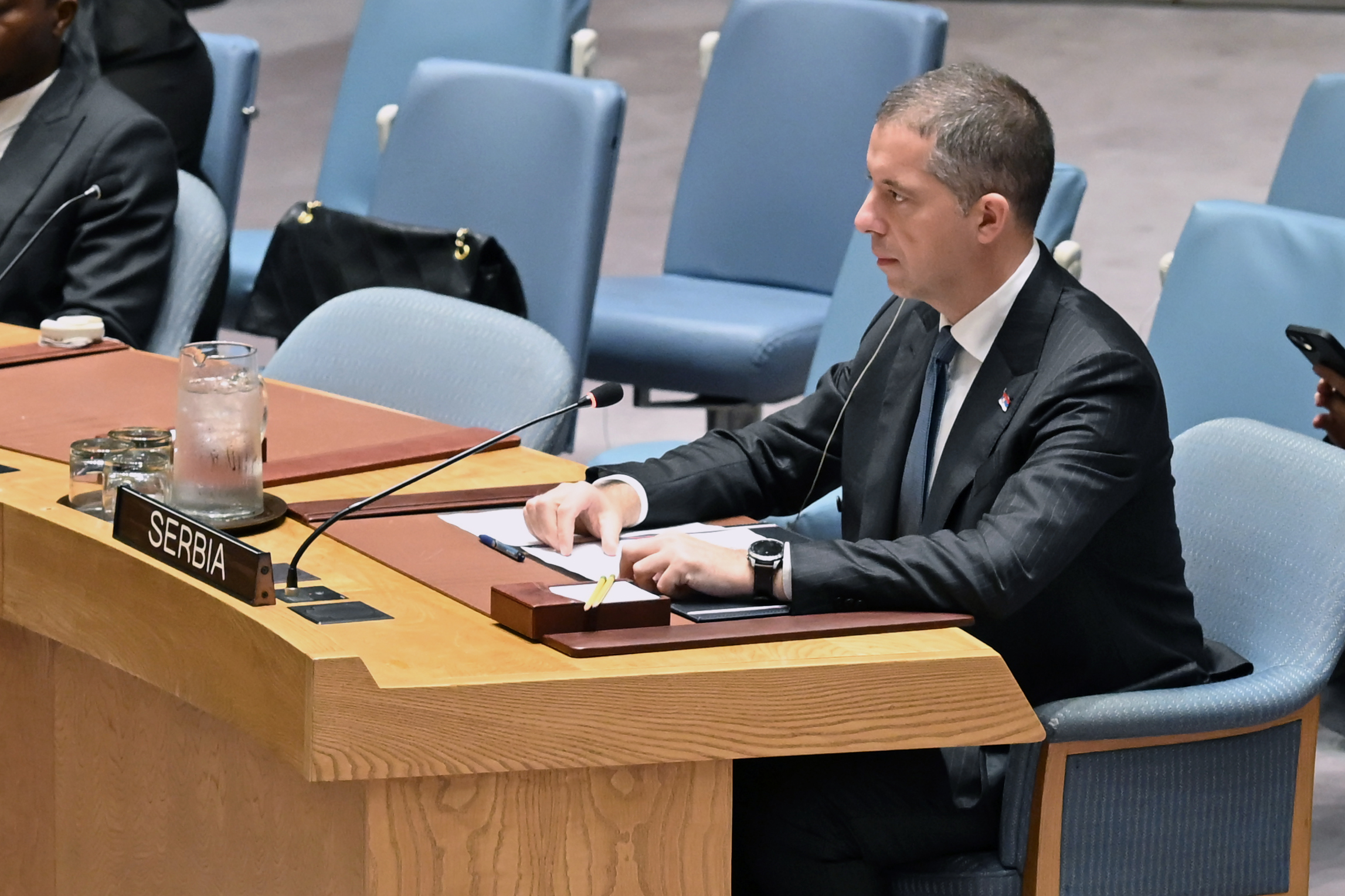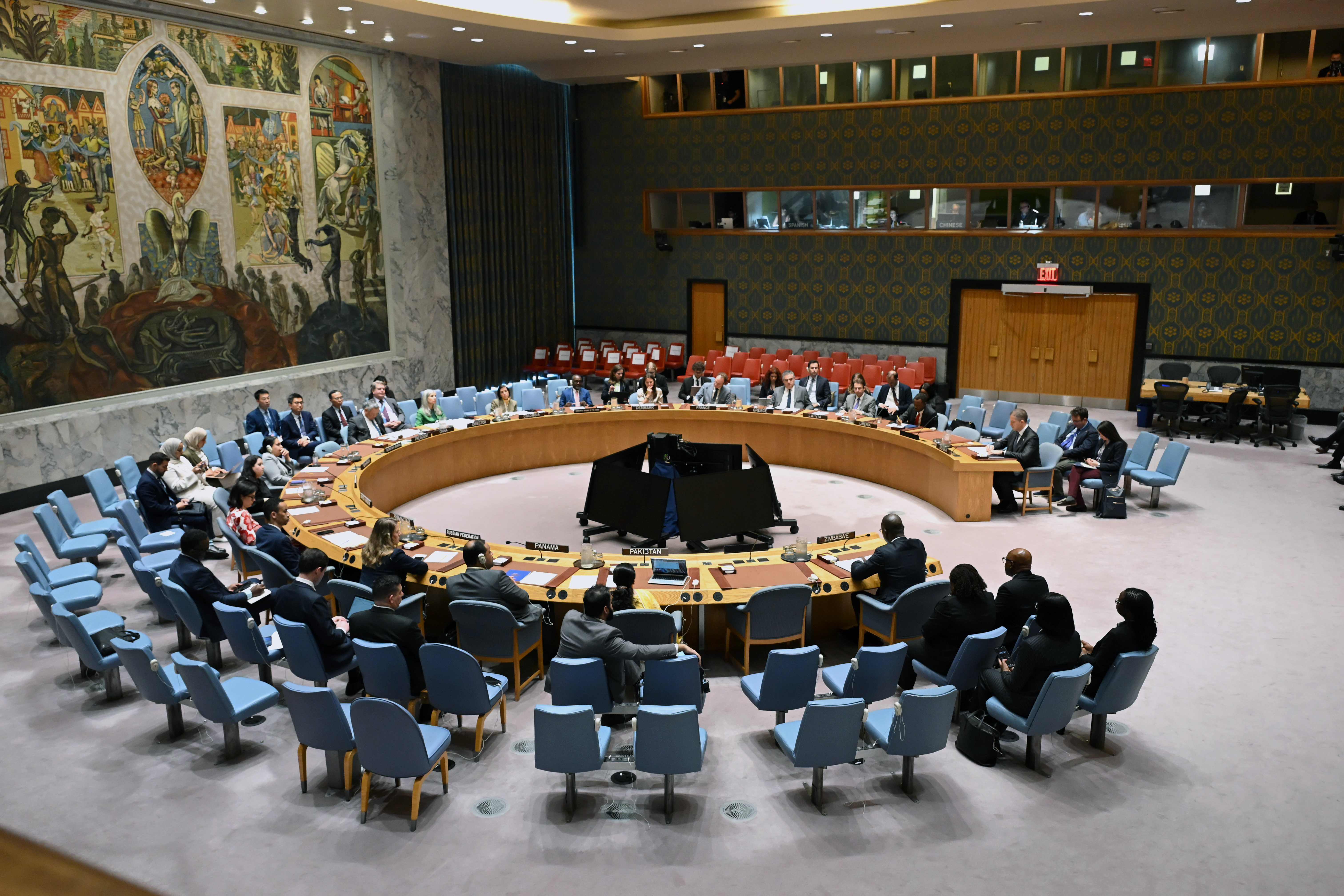

Đurić: The Republic of Serbia Remains Committed to the UN Charter, Which Guides Us in Relations with All Countries of the World
At the outset of his address, Minister Đurić thanked the People's Republic of China, the current President of the Security Council, as well as Chinese Foreign Minister Wang Yi, for organizing today’s debate on a topic of fundamental importance for the future of the international order and the preservation of global peace.
“The UN Charter was not conceived as a document to be applied selectively. Either it will apply equally to all, or it will cease to apply to anyone. For the Republic of Serbia, this is not an abstract issue. We are among those who have experienced firsthand the consequences of the erosion of the fundamental principles of the UN Charter. For us, Pandora’s box of the collapse of international law was opened in 1999 with the aggression against our country carried out without authorization from the UN Security Council,” Đurić emphasized.
He recalled the words of Walter J. Rockler, an American lawyer and former prosecutor at the Nuremberg Trials, who assessed that the act “tore apart the fundamental provisions of the UN Charter and other conventions and treaties and represented the most brazen act of international aggression since the Second World War.”
Đurić stressed that those events demonstrated that force could prevail over law, that the Security Council could be bypassed whenever its decisions did not suit the powerful, and that sovereignty and territorial integrity were not inviolable where sufficient political and military power existed to override them.
“This did not only undermine peace in one country, but profoundly shook the very foundations of the international legal order. Because the moment it is demonstrated that the UN Charter is not applied equally to all, no one can credibly claim any longer that the principles of international law are universal and indivisible. Once a principle is violated for the first time, it ceases to be a principle. Rules applied selectively cease to be rules at all,” Đurić stated.
The Serbian foreign minister recalled that the 1999 conflict was ended through the adoption of United Nations Security Council Resolution 1244, a legally binding document for all UN member states.
“The principles of sovereignty and territorial integrity are clearly embedded in that resolution. Nevertheless, it has become one of the most violated and disregarded documents ever adopted by this distinguished body,” Đurić stated.
He underlined that the Republic of Serbia believes the United Nations must remain the irreplaceable center of the international order, not because it is perfect, but because there is no credible alternative to a system founded on universal rules and the equal participation of all states.
“The response to the crisis of multilateralism is not the search for new formulas, but the courage to return to what we have jointly agreed upon. The multilateralism we defend today was not created in times of peace and comfort, but emerged from the ashes of two catastrophic world wars and from the suffering of peoples who paid the highest price for freedom,” Đurić noted.
According to him, the Republic of Serbia knows that price well.
“Few nations can more convincingly testify to the sacrifices made in defense of freedom and the principles upon which the contemporary international system rests — the sovereign equality of states, respect for territorial integrity, and the conviction that universal rules must apply equally to all. Because the moment these principles are abandoned, once they become selective, we reopen the door to a world in which only force determines what is just and in which one actor seeks to impose domination upon others through power,” Đurić assessed.
Continuing his address, the Serbian foreign minister recalled that during World War I Serbia lost approximately 1.3 million people, nearly 26 percent of its population at the time.
“Entire generations disappeared, yet before those wounds could fully heal, World War II claimed the lives of more than another million people in our country. That is why Serbia does not speak of the UN Charter, sovereignty, and international law as abstract concepts. For us, these principles were defended through immense sacrifice and suffering,” Đurić concluded.
In a time of profound global change, he added, an increasing number of international organizations are reassessing their operational mechanisms in an effort to modernize and adapt to new circumstances.
“The UN80 Initiative, the Pact for the Future, and discussions on reforming the UN Security Council testify to efforts aimed at ensuring that the Organization remains effective, relevant, and responsive to the challenges of the contemporary world. If we wish the United Nations to preserve its authority and credibility, I believe it is necessary to revitalize the UN system. One possible avenue is the reform of the UN Security Council so that it becomes more representative and better adapted to present-day realities,” Đurić stressed.
That process, he pointed out, must be based on the broadest possible consensus among member states, as well as on greater representation of developing countries, particularly African nations.
“At the same time, proceeding from the need for more balanced and inclusive regional representation, we believe that any future model of Security Council reform should also include an additional seat for the group of Eastern European states. However, without a genuine return to respect for the UN Charter, no institutional reform will be sufficient,” Đurić emphasized.
The Serbian foreign minister stated that Serbia will continue to advocate for a world based on law rather than force, a world in which rules apply equally to all and in which the UN Charter is not a political instrument, but the universal foundation of the international order.
“The Republic of Serbia remains committed to the UN Charter, which guides us in our relations with all countries of the world, whether large or small, geographically distant or neighboring. Commitment to the values of peace, security, friendly relations, and economic and social progress also characterizes both our policy toward the world and our policy toward the Western Balkans. Rest assured that Serbia will remain a pillar in the defense of the UN Charter and the strongest bulwark of peace, both internationally and in the Western Balkans, even when at times confronted with the lack of responsibility of others,” Minister Đurić concluded.
He assessed that the world today finds itself amid a geopolitical hurricane in which armed conflicts, humanitarian crises, economic and energy instability, as well as a profound crisis of confidence in international institutions, are converging into a dangerous vortex threatening to engulf the very foundations of the international order.
“International law is increasingly giving way to force, interests, and geopolitical confrontation. What is especially concerning is that this process appears less and less like a temporary crisis and more and more like a systemic collapse of the existing order,” Đurić stressed.
Precisely for that reason, he emphasized, today’s debate goes to the very heart of preserving the credibility of the international order founded upon the UN Charter, adding that if the Charter ceases to serve as the universal legal and moral compass of international relations, the world will return to the logic of force, spheres of influence, and the rule of the stronger.